
 How to Buy Crypto (ShakePay)

IPTV Calgary: How to Choose a Legal Service in 2026
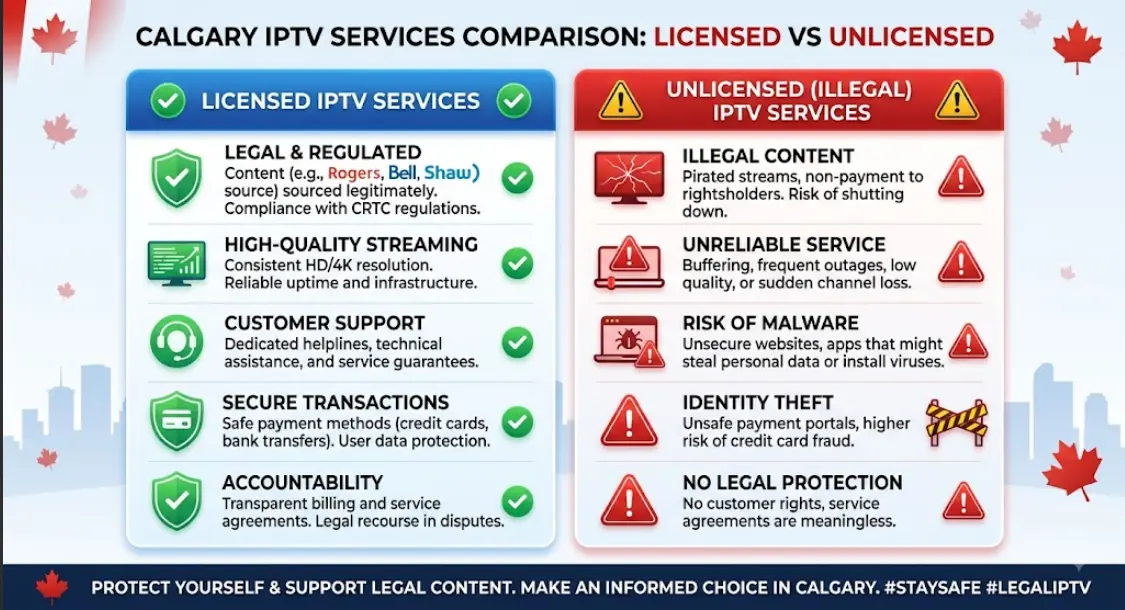
Cutting the cable bill sounds easy until you start shopping. Search iptv calgary and you land in two very different worlds. On one side sit licensed Alberta providers like Telus and Rogers. On the other sit hundreds of ads promising 20,000 channels for the price of a coffee. Both use the word "IPTV." Only one of them is a licensed television service in Canada.
That gap causes real headaches for Calgary households. Some people pay for a year, lose access in month three, and get nothing back. Others stay on a giant cable bundle they barely watch. This guide sorts it out. You will learn what IPTV actually is, which options are legal in Alberta, how much speed you need, and how to set everything up properly.

What IPTV Really Means for Calgary Viewers
IPTV stands for Internet Protocol Television. In plain terms, it means live TV channels sent over an internet connection instead of a coaxial cable or a satellite dish. That is the whole definition. It describes how the signal reaches your TV, not who owns the content.
This surprises a lot of people. For example, Telus Optik TV has delivered television over an internet connection in Alberta for years. Rogers Ignite TV works the same way. In other words, plenty of Calgary homes already use IPTV without ever calling it that.
So why does the term feel sketchy online? Because a second group borrowed it. Grey-market resellers advertise "IPTV subscriptions" with thousands of channels for a flat monthly fee. They use the same technology. However, they usually do not hold the rights to the channels they sell. That single difference changes everything about your risk, your reliability, and your refund options.
Is IPTV Legal in Canada? The Line That Actually Matters
Yes, IPTV is legal in Canada. The technology itself is neutral. What matters is whether the provider has permission to distribute the channels it sells.
Under the Copyright Act, redistributing TV signals without the rights holder's authorization is infringement. Licensed television distributors in Canada also fall under the CRTC's rules for broadcasting distribution. As a result, a licensed provider has real obligations: a published channel lineup, Canadian content requirements, and consumer protections.
Enforcement has grown steadily since 2019. In fact, Canadian courts have ordered major ISPs — including Telus, Rogers and Bell — to block access to specific unauthorized IPTV services. Later orders added a faster process for updating the blocked list. Meanwhile, rights holders have also targeted resellers directly.
The practical takeaway for Calgary: enforcement has focused on operators and resellers, not viewers. That said, when a service gets blocked, subscribers lose access instantly and rarely see their money again.
Red Flags of an Unlicensed IPTV Service
- A channel count in the thousands, including premium sports and movie channels, for one low flat fee.
- No Canadian business address, no phone number, and support only through Telegram or WhatsApp.
- Payment by e-transfer, gift card, or cryptocurrency only.
- Setup instructions that involve pasting a playlist link into a generic player app.
- Marketing that leans on phrases like "no contract, no credit check, every channel worldwide."
- A domain name that changed recently, or a service that asks you to bookmark backup addresses.
Questions to Ask Before You Pay
- Who holds the rights to these channels, and can you show me?
- Are you a registered Canadian business with a service address?
- What happens to my subscription if the service goes offline?
- Is there a published refund and cancellation policy?
- Do you bill through a normal credit card processor?
A licensed provider answers all five without hesitation. On the other hand, a grey-market seller usually deflects. That reaction tells you what you need to know.
Legal IPTV Providers in Alberta: Your Real Options
Calgary has fewer TV providers than Toronto, but the choices are solid. Rogers absorbed Shaw in 2023, so the old Shaw brand is gone. Today most homes choose between Rogers and Telus, plus a growing stack of app-based services.
| Option | How it works | Best for |
|---|---|---|
| Telus Optik TV | Licensed IPTV over Telus fibre or DSL lines | Homes wanting a full lineup, PVR and bundling |
| Rogers Ignite TV | Licensed TV over the former Shaw cable network | Households already on Rogers internet |
| Independent fibre in some condos | Building-wired fibre TV and internet | Downtown and inner-city condo residents |
| Single apps (Crave, StackTV, DAZN, Sportsnet+, TSN+) | Installed one by one on any device | Viewers who only want a few channels |
| Free ad-supported channels (Pluto TV, Samsung TV Plus, CBC Gem) | Live and on-demand channels at no cost | Casual viewing and bedroom TVs |
| Over-the-air antenna | Free local broadcast signals | Local Calgary news and Saturday hockey |
Most IPTV Calgary shoppers assume they must pick one path. In practice, mixing works better. For example, an antenna covers local channels for free. Then one or two apps handle the shows you actually watch. Finally, a licensed provider fills any gaps.
IPTV Calgary Costs: What You Should Expect to Pay
Prices change constantly, so treat any number you see online as a starting point. Still, a few rules hold steady in Canada.
First, every licensed TV provider must offer an entry-level basic package. The CRTC caps that package at $25 per month. Equipment rental sits outside that cap, so a box can add several dollars monthly. Additionally, providers must sell channels individually or in small bundles of up to ten. Sales reps rarely lead with these options. You often have to ask directly.
Second, do the math on apps before you assume streaming is cheaper. Three or four subscriptions add up quickly. Meanwhile, a bundled TV and internet plan sometimes lands close to the same monthly total.
Third, treat suspiciously low pricing as information. Licensed channels cost money to carry. When a service offers every premium sports channel for less than a single licensed app, that pricing is not clever business. It usually means nobody paid for the rights.
What Internet Speed Do You Need for Streaming TV in Calgary?
Speed matters less than stability, but you still need enough headroom. Use these per-stream planning numbers as a guide:
- SD (480p): around 3 Mbps
- HD (1080p): around 5 Mbps
- 4K Ultra HD: roughly 15 to 25 Mbps, depending on the service
Now multiply by the number of screens running at once. A family with two 4K TVs, a tablet and a gaming console needs real capacity. As a result, most Calgary households do fine on 100 to 300 Mbps. Going higher rarely fixes a picture problem on its own.
Two Calgary-specific notes help here. Telus PureFibre offers matching upload and download speeds where it is available. Rogers cable runs faster down than up, which is fine for watching TV. Additionally, check your data cap. Streaming in HD uses several gigabytes per hour, and 4K uses more. Unlimited data is worth the small premium for a streaming household.

Wi-Fi or Wired? The Fix Most People Skip
Most streaming complaints are Wi-Fi complaints in disguise. Your plan can be fast while the signal at the TV is weak. Try these steps in order:
- Run a speed test on a device sitting right beside the TV, not next to the router.
- Move the TV to the 5 GHz band if your router splits the networks.
- Run an Ethernet cable to the main TV whenever possible.
- Add a mesh node if your TV sits in a finished basement.
Concrete, older brick and long bungalow layouts all weaken Wi-Fi. In fact, a $30 Ethernet cable solves more buffering than a plan upgrade ever will.
Choosing an IPTV Box or Smart TV App for Your Calgary Home
You have three broad choices, and each suits a different household.
A provider's own box gives you the simplest experience. It handles the channel guide, the PVR and the remote. However, it usually comes with a monthly rental fee.
A mainstream streaming device — Apple TV, Roku, Fire TV or Chromecast with Google TV — runs licensed apps and updates for years. Meanwhile, a Smart TV built after roughly 2020 already runs most of the same apps natively.
Then there are generic Android boxes sold "fully loaded" at markets or online. Avoid these. They often ship with unknown firmware, unpatched security holes, and preinstalled apps that point at unauthorized sources. You inherit every one of those problems.
Smart TV App vs. Streaming Box
If your TV is newer, start with its built-in apps. Nothing extra to buy, nothing extra to plug in. On the other hand, older Smart TVs slow down badly after a few years of updates. A cheap streaming stick makes a five-year-old TV feel new again. It also gets app updates long after the TV maker stops shipping them.
How to Set Up a Legal IPTV Service in Calgary
- Check what your address can get. Enter your postal code on the Telus and Rogers sites. Coverage varies street by street in Calgary, especially for fibre.
- Decide what you actually watch. List your must-have channels for one month. Most households name fewer than ten.
- Ask about the entry-level package. Request the $25 basic tier and pick-and-pay channels before you accept a bundle. Compare that total against a bundle.
- Confirm your internet can carry it. Add up your simultaneous streams using the numbers above. Upgrade your plan only if the math says so.
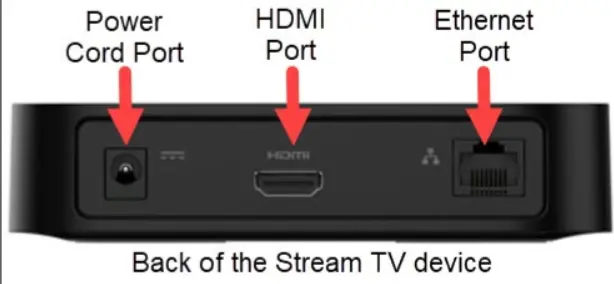
- Set up the hardware. Connect the box or stick to HDMI 1. Run Ethernet to it if the router is close. Otherwise, put it on the 5 GHz band.
- Install and sign in to your apps. Use the provider's official app from your TV's app store. Never sideload a player from a link someone sent you.
- Test during peak hours. Watch something live around 8 p.m. on a weeknight. That is when Calgary networks are busiest, so problems show up fast.
Keep your first bill and your confirmation email. If the service does not match what you were promised, you have grounds to cancel inside the trial window.
Fixing Common IPTV Problems in Calgary Homes
Even a licensed service hiccups sometimes. Fortunately, most issues trace back to three causes: the network, the device, or the app.
Buffering During the 7 p.m. Rush
Evening slowdowns are normal on shared networks. First, test your speed at 8 p.m. and compare it to a morning test. A big drop points to congestion. Next, move the TV to a wired connection. Then reboot the router, which clears most temporary issues. Finally, if wired speeds still fall short every evening, call your provider with your test results in hand.
Picture Freezes but Audio Keeps Playing
This pattern usually means the video decoder is struggling, not the connection. Start by lowering the stream quality in the app settings. Additionally, check whether your HDMI cable supports 4K and HDR. Older cables often cannot. Restarting the streaming device clears the issue in many cases. If it only happens on one app, reinstall that app.
One more Calgary note: winter power flickers can corrupt router settings. As a result, a full power cycle after a storm is worth trying before anything else.
Also called: internet TV, internet protocol television, streaming TV, OTT TV, or live TV streaming. Calgary shoppers run into all of these terms. They all describe the same delivery method. For more Canadian setup guides, streamiptv.ca covers device-by-device walkthroughs.
FAQ
Is IPTV legal in Canada?
The technology is legal and widely used by licensed providers. A specific service becomes illegal when it distributes channels without permission from the rights holders. So the question is never "is IPTV legal" — it is "is this provider licensed."
What is the best IPTV service in Calgary?
There is no single winner, because it depends on your address and your viewing habits. Fibre customers often get the most stable picture. Meanwhile, a household watching three shows total may spend less on individual apps. Check availability first, then match the lineup to what you watch.
How do I find a reliable IPTV Calgary provider?
Look for a registered Canadian business with a published address, normal card payments, and a written cancellation policy. Additionally, check whether the channel lineup is public on the website. Licensed providers list it openly, because they are required to.
Can I watch Flames games through an internet TV service in Alberta?
Regional and national hockey rights sit with specific broadcasters, and those rights change between seasons. Check which network carries the games you want in the current season, then confirm your provider or app carries that network. Do not assume a package includes it.
Does streaming TV work with Telus PureFibre and Rogers internet?
Yes. Any licensed app or service runs over any Calgary internet connection with enough speed. Fibre gives you matching upload and download speeds. Cable gives you strong download speeds, which is what streaming mainly needs.
How much data does internet television use per month?
Usage depends on resolution and hours watched. HD viewing uses a few gigabytes per hour, and 4K uses considerably more. A household watching several hours daily can pass a typical data cap quickly. For that reason, an unlimited plan usually costs less than overage fees.
Do I need a VPN to watch IPTV in Canada?
Not for a licensed service. A VPN can even break geo-verified apps, so many providers block them. It is also worth being clear: a VPN does not make an unauthorized service legal. It only hides traffic.
What happens if my provider gets blocked by a court order?
Access stops, often without warning. Blocked services rarely issue refunds, and support channels tend to go quiet. Any money left on your subscription is usually gone. This is the single biggest financial risk of grey-market services.
Is internet TV cheaper than cable in Alberta?
Sometimes, but not automatically. Once you add three or four apps plus internet, the totals converge. Run the numbers for a full year, including equipment fees and promotional pricing that expires. That comparison is more honest than a monthly headline price.
Can I use an IPTV box I bought secondhand?
A brand-name streaming device is fine after a factory reset. However, avoid generic boxes that arrive with unfamiliar apps already installed. Reset it, or better yet, buy new. Security matters when a device sits on your home network.
Will streaming TV work at an acreage outside Calgary?
It can, if the connection is stable. Fixed wireless and satellite both work for standard HD viewing. That said, latency and weather can affect live sports more than on-demand shows. Test during peak hours before committing to a plan.
How do I watch local Calgary channels online?
Several local broadcasters stream through their own free apps and websites. CBC Gem carries a free ad-supported tier. Additionally, an over-the-air antenna picks up local Calgary signals at no monthly cost. Many households pair an antenna with one or two paid apps.









Comments (0)
Leave a comment